Sirens are blaring behind closed doors. Markets are shaking, war rooms are lit, and thirteen nations have quietly locked arms in a move that could redraw the global map overnight. Missiles are on the move, intelligence agencies are on high alert, and leaders are gathering in shadowed corridors to weigh decisions that could shape the balance of power for years to come. What began as “defensive coordination” is now being viewed by analysts and diplomats as something far larger — a strategic alignment born from growing uncertainty and rising global tensions.
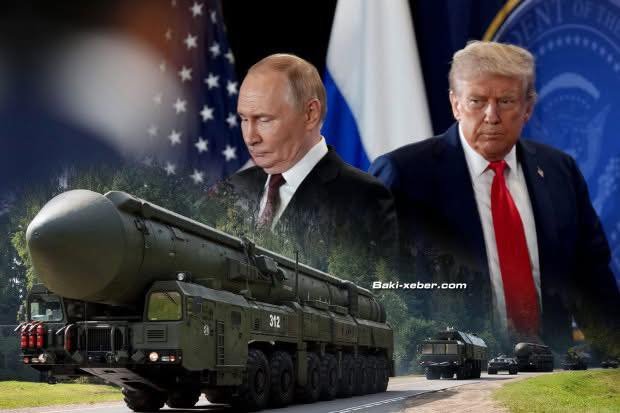
Behind the official language of cooperation lies a coalition built on fear, calculation, and the cold arithmetic of geopolitics. These thirteen governments, each carrying their own histories, rivalries, and strategic interests, have chosen to stand together not necessarily out of trust, but out of necessity. The images circulating through defense circles — long-range missile systems, emergency military briefings, and stone-faced leaders addressing their security councils — paint a picture of a world preparing for possibilities few want to openly discuss.
Officials close to the negotiations say the alliance did not emerge overnight. Months of quiet diplomacy, intelligence exchanges, and private security meetings laid the groundwork for what is now being described as a “collective deterrence framework.” The coalition’s members reportedly agreed that the rapidly shifting global security environment requires closer coordination, faster response mechanisms, and the ability to act jointly if a crisis erupts.
For financial markets, the development has sent ripples of uncertainty across multiple sectors. Investors are watching closely as defense stocks climb while energy and commodities experience sharp fluctuations. Analysts warn that even the perception of a new military bloc could trigger counter-alliances, increasing volatility in an already fragile global economy.
Security experts note that the creation of such a coalition often signals deeper strategic anxieties. In recent years, regional conflicts, technological arms races, and shifting alliances have pushed governments to reconsider how they guarantee their national security. Military planners now face an environment where cyber warfare, space assets, artificial intelligence, and hypersonic weapons are rapidly transforming the battlefield.
Within the coalition, coordination reportedly extends beyond traditional military cooperation. Sources suggest joint intelligence operations, shared satellite surveillance data, and integrated cyber defense strategies are all part of the evolving framework. In practical terms, this could allow member states to detect threats earlier, respond faster, and present a unified front against potential adversaries.
Yet unity does not erase complexity. Each of the thirteen nations brings its own political pressures and strategic calculations to the table. Some members face domestic debates about the risks of deeper military commitments, while others view the coalition as an essential shield in an increasingly unpredictable world.
Diplomats caution that the formation of such a bloc inevitably sends signals far beyond the member states themselves. Every show of strength invites a response. Every new alliance redraws someone else’s red line. In capitals around the world, foreign ministries are carefully analyzing what this coalition means for their own security policies.
Behind the scenes, emergency consultations are already underway. In late-night phone calls and urgent diplomatic meetings, officials are attempting to prevent rhetoric from escalating into confrontation. History shows that alliances can both stabilize and destabilize the international system — acting as powerful deterrents while also increasing the risk of miscalculation.
Military analysts emphasize that the coalition’s leaders appear to be walking a delicate line. By demonstrating collective strength, they hope to discourage aggression and maintain strategic balance. At the same time, they must avoid provoking the very escalation they seek to prevent.
Public statements released by several governments stress that the coalition is defensive in nature. The official message is clear: cooperation is intended to preserve stability, not provoke conflict. Still, in a world where perception often matters as much as reality, even defensive alliances can shift geopolitical dynamics.
Citizens across multiple regions are watching the developments with a mixture of concern and uncertainty. Social media platforms have erupted with speculation, while political commentators debate whether this marks the beginning of a new era of global alignment.
For now, the coalition remains a symbol of a world navigating between caution and confrontation. The strategic message is unmistakable: in the face of rising uncertainty, nations are choosing strength through unity.
But the broader question remains unanswered. Will this alliance serve as a stabilizing force that prevents conflict — or will it trigger a new cycle of rival coalitions and military competition?
As diplomats race to keep dialogue open and military planners prepare for every possible scenario, the world finds itself in a narrow space between deterrence and disaster. Leaders hope that the fear of what could happen will remain stronger than the will to test it.
For now, the sirens behind closed doors continue to echo — a reminder that history often turns not in public speeches, but in the quiet decisions made when the world is watching most closely.